PGST 24-Piece WiFi + GSM/4G Home Alarm System – Key Technical Specifications
- System type Wireless home security alarm system
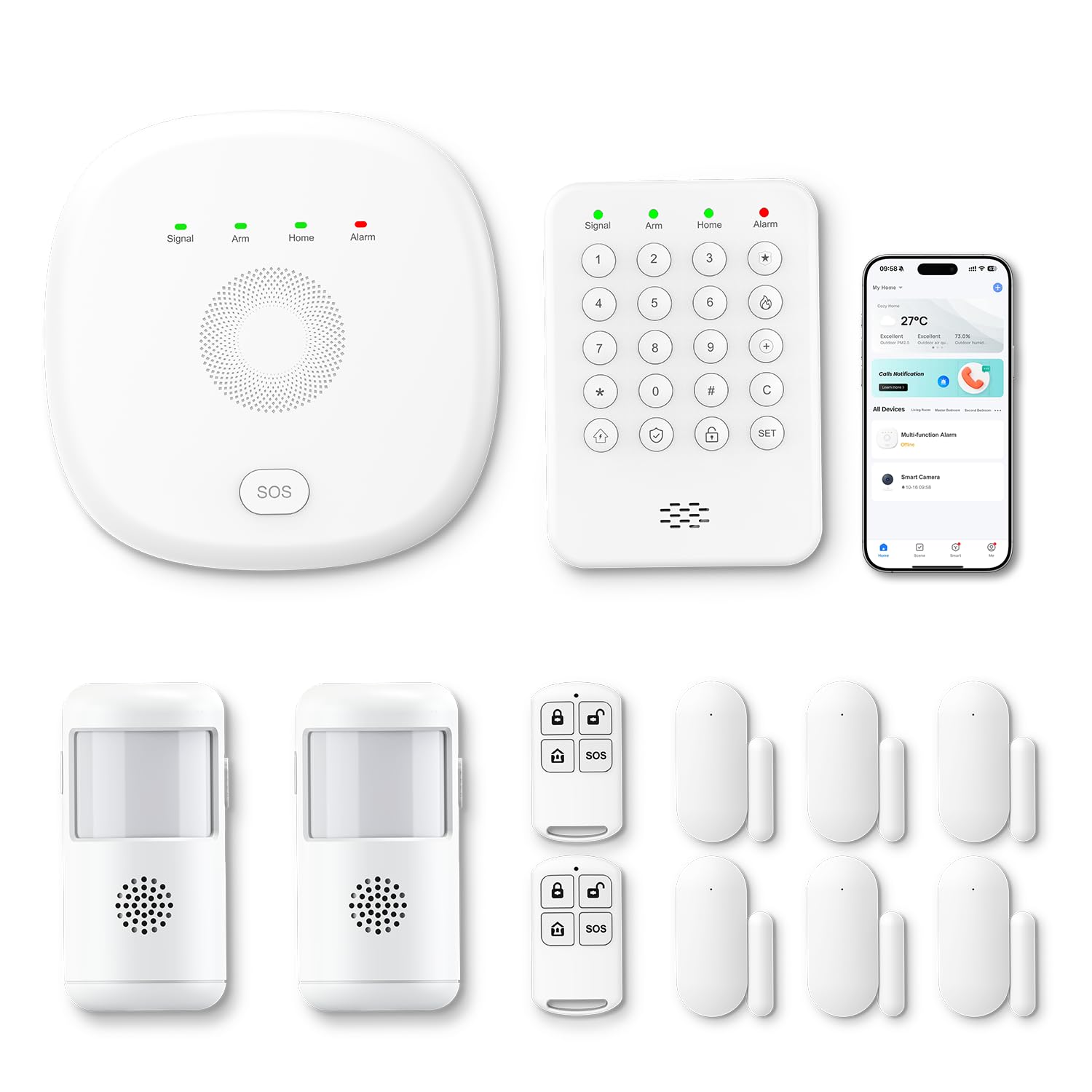
- Kit size 24-piece alarm system
- Network connectivity 2.4 GHz Wi-Fi and 4G cellular connectivity, with automatic switching to 4G when Wi-Fi is offline; 5 GHz Wi-Fi is not supported
- Mobile app control Smart Life or Tuya app compatibility for smartphone control, alarm notifications, event history, and shared system access
- Voice assistant compatibility Amazon Alexa and Google Assistant
- Alerts and alarms App notifications, main hub alarm, tamper-triggered alarm, and SOS-triggered alarm
- Alarm dial and messaging Auto alarm dial and SMS/phone alert functions are listed; third-party fees may apply, and in-app SMS/phone alarms should not be used
- Tamper protection Physical tamper protection with security-code disarming
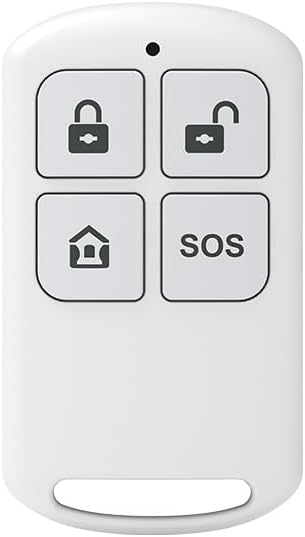
- Emergency control Includes one portable SOS device; the remote control also supports SOS activation
- Power source Battery powered
- Color Black and white
- Product dimensions 8 × 4 × 3.5 inches
- Subscription requirement No monthly subscription fee for system functions
Home security has a way of turning everyday life into a parade of small worries: Did I lock the door? Would I know if someone came in? Could my family reach me in an emergency? The PGST wireless home security system aims to answer those questions without adding another monthly bill to the household budget. Its pitch is straightforward: app-based monitoring, voice-assistant compatibility and alerts when something trips the alarm.
The allure is in having the basics gathered into one system. Through the companion app, you can check on the home, review activity and share access with family members. That shared access matters: security works better when it isn’t a one-person job, especially in a busy household. Voice control with Alexa or Google Assistant offers another convenient way to manage the system, though it’s best treated as a handy extra rather than a substitute for learning how the alarm works.
Connectivity is another part of the promise. The system is designed to switch to cellular service if the home’s Wi-Fi goes down, which could help keep alerts flowing during an internet outage. That backup depends on having an appropriate SIM and service, however, and the listing’s “no monthly fee” language needs a careful read: the product does not require a subscription for its core functions, but cellular service and certain text or phone alerts may involve separate third-party charges. Check those costs and coverage before relying on them.
The included emergency button and remote add a practical, human touch. They may be useful for children, older relatives or anyone who wants a quick way to trigger an alert without reaching for a phone. The tamper alert is reassuring in principle, too, but no wireless alarm can replace sound installation, sensible entry-point security and a household plan for what to do when an alert arrives.
At $123.03, the PGST home alarm system looks like a budget-conscious route to app-connected security, particularly for people who want basic monitoring without a recurring subscription. The trade-off is that buyers should go in with realistic expectations: that is a self-managed alarm, not a professionally monitored service. Confirm that the app, network setup and any cellular-related charges fit your needs, then make sure everyone at home knows how to arm, disarm and respond to it.
Pros
- The 24-piece wireless home security system offers a broad set of components for building coverage across multiple areas of a home.
- Wi-Fi and 4G connectivity provide a useful backup path if the home internet goes offline, helping keep alerts connected.
- Smart Life and Tuya app support makes it easy to check notifications, review event history, and share access with household members.
- Portable SOS controls, tamper alerts, and security-code disarming add practical layers of protection for everyday use.
- Alexa and Google Assistant compatibility can make the alarm system more convenient to operate alongside a smart home setup.
- No monthly subscription is required for the system’s core functions, which may help keep ongoing costs down.
Cons
- The system supports only 2.4 GHz Wi-Fi, so households using a 5 GHz-only network will need to enable a compatible band.
- Using cellular backup or SMS and phone alerts may involve third-party charges, so “no monthly fee” does not necessarily mean every communication option is free.
- The listed app-based SMS and phone alarms should not be used, which may limit how users rely on the auto-dial and messaging features.
- Battery-powered components need periodic checks and replacement or recharging to keep the wireless security system ready.
- Its cellular connection is a backup route, not a substitute for a separately confirmed professional monitoring service.